


€
Promo: -€
Total Delivery cost of items: €
Sub total: €
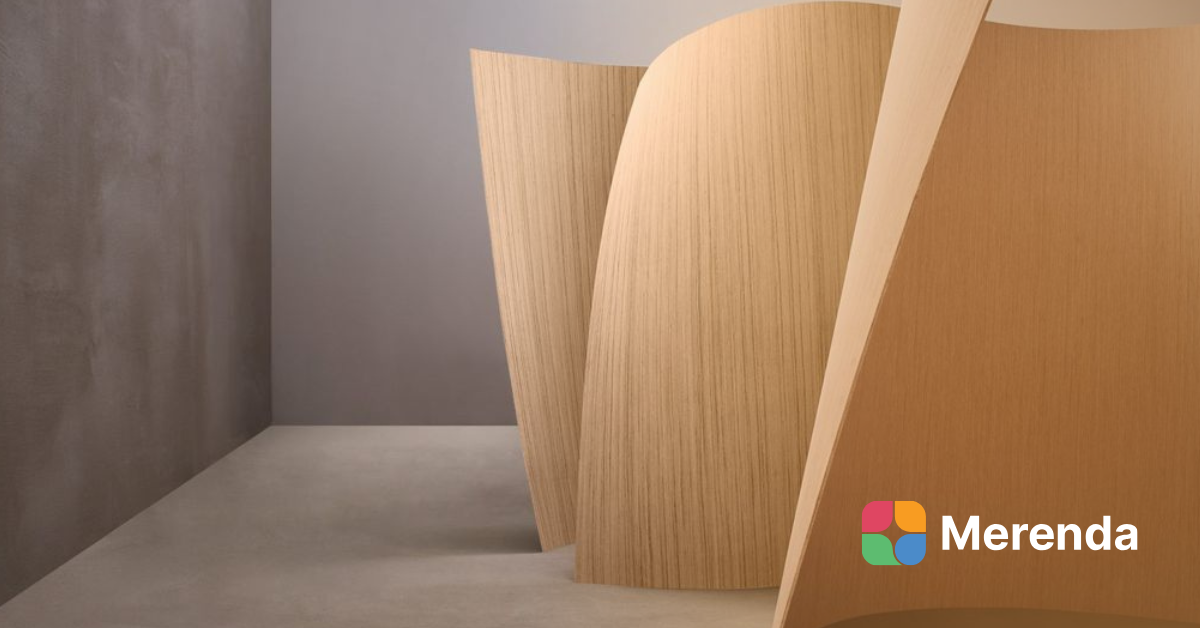
You’ve designed the perfect interior. The grain direction, the species, the colour tone, everything is agreed and approved. The sample board is on the wall. The specification is issued. Then the joinery company comes back six months later, and the installation looks different from the sample. Not dramatically different. Just different enough.
This is the specification accuracy problem. It is one of the most common sources of friction between architects, contractors, and joinery companies on timber-specified projects — and it is entirely avoidable. Understanding why it happens and why ALPI reconstituted veneer doesn’t have this problem changes how you approach surface specification on large commercial projects.
Natural veneer is sliced directly from a tree trunk. The character of each sheet, its grain, its colour, its texture, reflects the specific biology of that tree: its species, its age, its growing conditions, the direction it was cut. This is what makes it beautiful. It is also what makes it variable.
The challenge for specification is that variability is cumulative. A hotel project requiring 300 door faces will draw veneer from multiple log runs. Each run comes from a different log of the same species, but a different tree. The first batch might be slightly warmer. The second might have a finer grain. Neither batch is wrong. Neither matches the approved sample exactly.
By the time installation begins, you have 300 door faces, all nominally the same specification, but none of them matches each other with the consistency the original design intended. The architect complains. The contractor points to the joinery company. The joinery company points to the veneer supplier. The supplier points to the nature of natural timber. Everyone is right. The specification was always going to produce this result.
300 door faces—all nominally the same specification. None of them matched each other with the consistency the design intended. This is not a defect. It is what natural veneer does.
The specification accuracy problem has three distinct components, each of which adds risk and cost.
Typical waste on natural veneer projects from selection rejection — sheets that don’t match the approved sample closely enough to be used. With ALPI, waste drops to approximately 5%.
ALPI reconstituted veneer is produced from a designed block — a constructed object where the grain, colour, and texture are determined before the first sheet is sliced. Every sheet sliced from that block is identical to every other sheet from that block. Not approximately identical. Identical.
A product code indexes the block. That product code, for example, 10.87, references a specific colour, grain pattern, format, and production specification. When you write that code into your specification document, you are referencing a product that can be reproduced identically, from the same production specification, in any quantity, at any time.
‘100% on specification’ is not a marketing claim. It is a structural property of the product. If you approve a 60×60cm finished sample and the product code is included in the specification, the 400th door frame delivered will match that sample as closely as the first. Not because the production team were careful. Because the product was designed to be consistent.
The practical implication is that specification language becomes more powerful with ALPI than with natural language. When you write a natural veneer specification, you are describing a material category, species, cut direction, and grade. When you write an ALPI specification, you are referencing a specific product that cannot be meaningfully substituted.
The difference in specification language is significant:
This is not a trivial distinction. On projects where value engineering pressure is high — and it is on most commercial projects — the specificity of the product code protects the design intent from the moment the specification is issued to the moment the material lands on site.
When you write an ALPI specification by product code, you are referencing a product that cannot be meaningfully substituted, and substitution requires your written approval.
For projects with multiple phases, the argument for reproducibility is decisive. ALPI’s product codes are permanent references. A product specified today under code IP 1087 will be available under the same code and specification years from now. The hotel chain’s second property. The retail rollout’s sixth store. The healthcare campus’s final building.
This matters more than it might initially appear. When a natural veneer specified for a phase one project needs to be matched for phase two eighteen months later, the specification team faces a significant challenge: finding a log that produces veneer close enough to the original to satisfy the architect and the client. Sometimes they succeed. Often, they don’t, and the result is a visible discontinuity between phases that the client notices immediately.
With ALPI, phase two is specified the same way phase one was: by product code. The arriving veneer matches the veneer already installed. The architect signs off. The client is satisfied. The joinery company doesn’t have to handle a difficult conversation about why the new work looks slightly different from the old.
Specifying ALPI correctly is straightforward if it’s done in the right sequence. Here is the process Merenda recommends:
Ready to specify with confidence?
Merenda provides sample boards, product codes, and pre-tender support for architects and interior designers specifying ALPI in Ireland.